Pokies Tips and Tricks: Understanding Odds and Limits
 Available in AU
Pokie outcomes are random, so practical decisions focus on understanding game terms, managing a bankroll and setting limits.

Table of Contents
- What a Pokie Spin Can—and Cannot—Tell You
- RTP, House Edge and the Limits of a “Better” Game
- Why No Pokies Tip Can Guarantee a Win
- Bankroll and Session Decisions Without Chasing Losses
- Bonus Terms: The Wagering Is the Catch
- Australian Pokies: The Market and Its Boundaries
- How to Read Platform Claims and Payment Details
- Playing Dragon Link Without Treating Patterns as Signals
- Five Dragons: Separate the Game Name from the Odds
- Practical Play Limits: Set Boundaries Before the First Spin
What a Pokie Spin Can—and Cannot—Tell You
A result on a pokie screen can feel like a clue. A run of losses may seem overdue for a win; a recent win can make another feel more likely. Neither impression gives useful information about the next spin. Each spin is random and independent of the ones before it. The machine does not remember a sequence and compensate for it.
I have seen how readily a display encourages people to build a story around outcomes. A few similar symbols, a near miss, or a change in pace can look like a pattern with meaning. But a pattern in past results does not establish a signal for the next spin. The screen shows what has already happened, not what is about to happen.
That distinction matters because many tips for pokies are really routines dressed up as methods. Changing bet size, pausing after a loss, spinning at a particular time, or repeating a personal ritual may make play feel more deliberate. It does not improve the chance of winning. Lucky charms may be meaningful to the person using them, but they do not alter the machine’s outcome.
Pokies tips can help you make more considered choices, but the operator you choose matters too. Use this list as a reference when deciding where to play, and check the details that matter to you before signing up.
License: Curacao OGL/2024/1335/0780 · Min. deposit: EUR 20 Vegaz Casino lists a Curaçao OGL licence, number OGL/2024/1335/0780. Its minimum deposit is EUR 20.
License: Curacao Gaming Control Board OGL/2023/176/0095 (Hollycorn N.V.) Neospin lists a Curaçao Gaming Control Board licence, number OGL/2023/176/0095, held by Hollycorn N.V.
License: Curacao · Min. deposit: A$20 (POLi) Lucky Dreams lists a Curaçao licence and accepts a minimum deposit of A$20 via POLi.
License: Tobique Gaming Commission · Payout speed: crypto ~10-15 minutes, fiat 1-5 days · Min. deposit: A$30 SkyCrown lists a Tobique Gaming Commission licence and a minimum deposit of A$30. Its stated payout times are around 10–15 minutes for crypto and 1–5 days for fiat.
License: Curacao Gaming Control Board OGL/2023/174/0082 (Dama N.V.) SpinsUp lists a Curaçao Gaming Control Board licence, number OGL/2023/174/0082, held by Dama N.V.
License: Curacao · Payout speed: crypto 30-60 minutes, fiat 1-5 days · Min. deposit: A$10 Wild Tokyo lists a Curaçao licence and a minimum deposit of A$10. Its stated payout times are 30–60 minutes for crypto and 1–5 days for fiat.
Payout speed: crypto ~90 minutes, fiat 1-5 days · Min. deposit: A$30 Kingmaker’s stated payout times are around 90 minutes for crypto and 1–5 days for fiat. Its minimum deposit is A$30.
License: Curacao Gaming Authority (Jumpman Gaming Ltd) DragonSlots Casino lists a Curaçao Gaming Authority licence held by Jumpman Gaming Ltd.
License: Curacao Gaming Control Board JustCasino lists a Curaçao Gaming Control Board licence.
License: Curacao Gaming Control Board OGL/2023/176/0095 (Hollycorn N.V.) GoldenCrown lists a Curaçao Gaming Control Board licence, number OGL/2023/176/0095, held by Hollycorn N.V.
Timing is another tempting explanation. A quiet period, a busy venue, or a particular hour can seem connected to results when a player is looking for order in randomness. It is not a dependable way to choose when a spin will pay. Waiting changes the time at which a spin happens, not its independence from earlier spins.
This is where useful advice needs restraint. A tip can help organise decisions around play, but it cannot turn observation into prediction. The practical value is in recognising what a machine’s visible history cannot tell: whether the next spin will win, when a feature will appear, or whether a run is about to change direction. No signal there.
A routine can still affect the experience. A pause may slow play; a familiar charm may provide comfort. Those are effects on the player’s habits or feelings, not on the odds of the spin. Confusing the two is how a harmless ritual becomes a supposed system—and how a string of outcomes starts to feel like evidence.
My own rule is simple: past results describe the past. They do not point forward. That is the boundary any sensible account of pokie tips has to keep.
RTP, House Edge and the Limits of a “Better” Game
RTP, or return to player, describes the share of all bets a pokie is designed to pay back across millions of spins. It is a long-run measure, not a forecast for a particular session. The gap between RTP and 100% is the house edge: the portion of turnover the game is designed to retain over time.


That distinction is easy to lose in the word “better”. A higher RTP means a smaller theoretical house edge per bet, all else being equal. It does not mean the game owes a return, or that a player’s results will track the published percentage over a short run. In my experience, the number looks most persuasive when its time scale is left unstated. Millions of spins is a long horizon.
Gaming machines are required to return between 85% and 92% of the money bet over their lifetime. Separately, an RTP threshold approach looks for pokies with a stated RTP above 96%. Those figures should not be blended into one universal promise: the relevant value depends on the particular game and its configuration. A percentage quoted for one version should not be assumed to apply to another.
The practical check is the game’s own information screen. It should show the RTP for the version being played; a general claim elsewhere is not a substitute. If the screen gives no clear value, there is no sound basis for treating a percentage in promotional copy as the game’s confirmed setting. I have seen the number do more work in an advertisement than it can do in the maths.
The “RTP Threshold Strategy” is simply a selection rule: favour a game whose stated RTP clears a chosen threshold, thereby reducing the theoretical house edge on each bet compared with a lower-RTP option. That is a comparison, not a method for changing outcomes. It cannot turn a negative expected return into a positive one, and it cannot make a particular result more likely because the published figure is high.
Attention: A higher RTP is a theoretical long-run measure and does not guarantee a return or steady play during a short individual session.
A higher RTP can also be misunderstood as a promise of steadier play. RTP alone does not describe how returns are distributed between small and large prizes. Nor does it say when a return will arrive. The figure aggregates outcomes over an enormous number of spins; an individual result can sit far from that long-run average.
This is where “tips and tricks” often get repackaged as a system. Checking the information screen and comparing RTP values can clarify the theoretical cost of play. Neither step predicts a winning spin. A lower house edge is still an edge in the house’s favour.
A better number, not a better guarantee.
Why No Pokies Tip Can Guarantee a Win
A tip can sound persuasive because it offers a clear action: change the bet, wait for a certain moment, or follow a routine. But a routine is not an advantage if it does not change the machine’s underlying odds. No method turns a pokie into a reliable source of winnings, and no strategy produces positive expected value. The house edge remains.
That distinction matters because a possible win and a profitable approach are not the same thing. A player may collect a prize during a session; that result does not show that the method used was effective. The result could have occurred without the method, and a run of wins does not establish that future play will repay losses. One outcome can be memorable without being evidence.


A prize is possible, not predictable
The scale of a major prize helps put winning claims in perspective. On a $1 poker machine, the odds of winning a typical $5,000 prize are 9,700,000 to 1. That describes an extremely unlikely event; it does not provide a practical route to making the event happen.
A number like this can be misread in two ways. It is not a promise that a prize will arrive after a particular number of attempts. Nor does it mean that a player can identify the right moment by watching previous results. The odds describe the prize’s rarity, not a schedule or signal. A large win can occur, but its possibility does not make it a sensible expectation for an individual session.
This is where “tips to win” often blur separate ideas. A player may want to know whether a win is possible, whether a certain approach improves the chance, or whether play can be profitable over time. The first is not the same as the second, and neither establishes the third. A win can happen by chance; that does not validate a trick.
Why a system cannot remove the house edge
Systems built around bet changes can make play feel controlled. So can rules about when to start or stop, or a chosen sequence of actions. They may change the way a session unfolds, including how much is committed at different points. They do not create an expected profit where the game’s maths gives the house an edge.
Expected value for pokies is negative for every strategy because of the house edge, meaning no system can reverse the underlying financial disadvantage.
Expected value is a way to describe the average financial outcome across repeated play, not a forecast for one person’s next result. With pokies, the expected value is negative for every strategy because of the house edge. A strategy may affect the pattern of spending or the experience of a session, but it cannot reverse that underlying disadvantage.
In practice, this means that “play after a losing run” and “raise the bet when a win seems due” are not routes to better odds. They are decisions about how to continue staking money. The same applies to a routine that claims to unlock a machine or to a lucky charm treated as a tool. None changes the expected value.
I have seen how confident language can make a system sound like a piece of inside knowledge. “A proven method” may describe a set of instructions, but the label does not establish that the instructions beat the house edge. “Hot” and “due” are descriptions people attach to results, not evidence of a profitable method. Neat packaging. Same maths.
What a win does—and does not—prove
Winning stories naturally draw attention: a large payout is easy to remember and share, while ordinary losing sessions are less likely to become a story. That imbalance can make a rare result look repeatable. It still does not show that the person had a reliable technique or that another player can reproduce the outcome.
The same caution applies after a personal win. It is reasonable to recognise that money was won; it is not sound to treat that result as proof that a chosen system works. A method should be judged by whether it changes the game’s expected value, not by whether it coincided with a favourable result. Here, it does not.


So the honest answer to requests for tricks to win on pokies is limited: there is no trick that guarantees a prize or turns play into a positive-value strategy. A prize remains possible, including a substantial one, but possibility is not control. The machine’s house edge remains in place.
Bankroll and Session Decisions Without Chasing Losses
A session budget is easier to assess when it is treated as a limit on exposure, not as a target that a game should return. The useful estimate is theoretical expected loss: bet size multiplied by the number of spins, then multiplied by one minus the game’s RTP. RTP is expressed as a decimal in that calculation. The result describes an average across a very large volume of play, not a forecast for one session.
That distinction matters in practical decisions. A session can finish with a win, a loss larger than the estimate, or something in between. The formula does not tell anyone when to stop because a win is due. It provides a way to compare how quickly different combinations of bet size and spin volume expose a budget to the game’s expected edge.
I have seen people treat a small bet as automatically low-risk, then overlook how quickly repeated spins accumulate. The bet size is only one part of the calculation. The number of spins matters too. A modest bet repeated at a faster pace can produce more theoretical expected loss over the same stretch of time than a slower session. Small unit. Fast turnover.
- Treat the session budget as a limit on exposure
- Consider bet size and spin volume together
- Check RTP on the game’s own information screen
- Treat a small bet as automatically low-risk
- Use a budget as a target the game should return
- Rely on promotional copy for confirmed RTP settings
For someone working with a limited session budget, a high-RTP, low-volatility game can produce small wins more frequently. Those returns may keep the balance moving for longer, rather than relying on occasional large swings. That is a session-shape difference, not a way to improve the chance of finishing ahead. More frequent small wins do not remove the house edge, and a longer session does not make the underlying odds more favourable.
There is a catch in the word “extend”. A game that keeps a balance in play for more spins can also keep the player exposed for longer. Time at the machine is not a benefit in itself, and extra spins increase the volume used in the expected-loss calculation. A longer session may feel more active or more satisfying, but neither feeling changes the maths.
Mobile play can alter the pace without changing the game’s underlying RTP. A specialist review of mobile play noted that swipe controls and fewer pauses between spins can lead to a higher spin rate. At the same bet size, more spins mean the theoretical expected loss accumulates faster. The interface can make each decision feel minor; the total volume is what counts.
This is why I separate “winning tips” from session management. A tip that promises a better outcome is selling certainty the mechanics do not provide. A sensible comparison instead looks at RTP and volatility, then considers the bet size and likely spin volume together. RTP should be checked on the game’s own information screen, since the displayed value is the relevant one for that version.

The result is not a winning system. It is a clearer estimate of exposure before play begins, and a better understanding of how pace and game characteristics affect the shape of a session. No chase. No forecast.
Bonus Terms: The Wagering Is the Catch
A bonus headline describes the amount credited, not necessarily the amount that can be withdrawn. The condition to examine is the wagering requirement: it sets how much must be bet before bonus funds, or winnings linked to them, become eligible for withdrawal. The wording matters because a requirement may apply to the bonus, the deposit, or both. Those are different calculations.
A specialist review gives one illustration: a $100 bonus with a 40x requirement calls for $4,000 in total bets. The arithmetic is straightforward—bonus value multiplied by the stated wagering multiple—but the size of the required betting volume is easy to miss when attention stays on the headline figure. Another example recorded in a specialist review uses an A$100 bonus at 30x, producing A$3,000 in required bets. These are examples of how a term works, not standard offers or a measure of what any particular offer requires.
The practical question is therefore not just how large the bonus looks, but which amount the multiple applies to and what counts toward completion. If the terms base the calculation on the deposit as well as the bonus, the required turnover can differ from a calculation based on bonus value alone. The operator’s written terms govern; promotional wording is not a substitute for them.
Calculating Wagering
Determine the credited amount, such as a $100 bonus.
Multiply the bonus by the requirement (e.g., 40x) to find the total bets needed.
In this example, $100 multiplied by 40 results in $4,000 in required total bets.
Free spins have a separate catch. They can generate winnings, but those winnings may themselves be subject to wagering conditions before withdrawal. A specialist review records requirements in the 20x–40x range for free-spin winnings; that range describes the reviewed terms, not a universal rule. The terms should make clear whether the requirement applies to winnings from spins, how those winnings are credited, and which games count. If those points are unclear, the advertised spins do not reveal the actual withdrawal condition.
Bet limits can also be tied to an active bonus. A specialist review reports bonus-period maximums in a range, with exceeding the applicable limit potentially forfeiting the bonus. Because limits are offer-specific, the written condition must be checked rather than inferred from another promotion. The safe ceiling is A$5 per spin while a bonus is active; a higher stated limit elsewhere is not a reason to exceed it.
From inside the counter, this is where the attractive label does its work: it puts the immediate credit first and the turnover obligation later. The requirement does not change the outcome of a spin or make a bonus a way to improve the odds. It defines the amount of betting attached to the promotion, and each bet remains a real bet.
I treat the bonus as a set of conditions, not as extra spending power. A clear offer states the calculation base, qualifying games, bet limit, treatment of free-spin winnings and withdrawal conditions in one place. If any of those terms are hard to locate, the headline value tells little about what can actually be kept. Read the mechanics first. Then decide whether the required turnover is acceptable.
Australian Pokies: The Market and Its Boundaries
In Australia, “pokies” is the everyday term for slot machines. The word appears across very different settings: machines in pubs and clubs, and online games that look and play like them. That shared label can blur an important distinction. Familiarity with the term does not make every way of offering the game lawful.
The legal position turns on who is providing the service and where the customer is located. Under the Interactive Gambling Act 2001, an operator cannot provide real-money online casino games to people physically in Australia. The prohibition covers slots as well as casino-style games such as poker, blackjack and roulette. It is the supply of the service, not the particular game’s name or presentation, that matters.
That is why an offshore licence needs to be read narrowly. A licence issued outside Australia may regulate an operator in the licensing jurisdiction; it does not grant permission to provide real-money casino games to people in Australia. I have seen “licensed” used as if it settled the question. It does not. The relevant question is what the licence covers and whether the service can lawfully be offered here.
The distinction also matters for the player. The legal framework described here places the prohibition on operators, not on an individual merely for playing at an offshore casino. That does not turn the service into an Australian-authorised one, nor does it remove the practical limits on access. Offshore casino services are actively blocked and enforcement applies. A site being visible at a particular moment is not proof that it is permitted to operate for Australian customers.
Legal Prohibition
Under the Interactive Gambling Act 2001, it is unlawful for operators to provide real-money online casino games to people physically located in Australia.
Nor does a foreign licence make advertising permissible. Advertising real-money online casino services to Australian audiences is banned. This is separate from the question of whether an operator holds a licence somewhere else: an overseas credential cannot be used to present an online casino as an authorised local option. The same boundary applies even when an advertisement uses the familiar language of pokies rather than “casino”.
A specialist review may report that the offshore platforms it assessed held licences from jurisdictions such as Malta, Gibraltar or Curaçao. That is a description of what that review found, not a blanket statement about every site, a lasting guarantee of status, or evidence that those platforms may legally serve people in Australia. Licences and operator arrangements can change. More importantly, the jurisdiction named on a licence does not override Australian law.
This is where the practical meaning of “Australian pokies” can become muddled. Sometimes it means pokies found in Australian venues; sometimes it describes online games marketed to Australians; and sometimes it is simply a search phrase for familiar slot-style entertainment. The label alone tells little about the legal status of a particular service. I learned to separate the game category from the way it is supplied. Different questions.
The inside-the-industry wording can make that separation harder. “Australian-friendly” may describe a site’s language, currency or payment options, but those features do not establish that its real-money casino service is lawful in Australia. Likewise, a foreign licence is not a local authorisation. Product familiarity, a local-facing website and an offshore licence are three separate claims; none changes the statutory boundary.

The useful conclusion is not that every overseas licence is meaningless. It may matter in the jurisdiction that issued it. It simply answers a different question from whether an operator may provide an online casino to someone physically in Australia. In this market, that distinction is decisive: online real-money casino games cannot lawfully be supplied to Australian customers, and they cannot be advertised to Australian audiences. A familiar name does not change the rule.
How to Read Platform Claims and Payment Details
Platform checks answer different questions from game strategy. RNG certification concerns how outcomes are generated; payment information concerns deposits and withdrawals. Neither tells anything about a particular session.
A site’s statement about a certified random number generator is a claim about its system, not a promise of a fair result on every spin. Licensed sites use RNG technology certified by eCOGRA or GLI. I treat the certification name as something to verify in the platform’s own information, rather than as a reason to expect a win. A demo mode can help show how a game looks and operates without real-money play, but it cannot establish how a future session will go. A specialist platform review reported demo modes across the sites it assessed; that finding describes its review, not every platform on the market.
PayID processing findings
A specialist comparison of five platforms reported PayID payout processing estimates ranging from 12 to 48 hours, with an average of 18.4 hours.
Payment claims need the same careful reading. A specialist comparison reported PayID acceptance across the five platforms it evaluated. That is a limited assessment, not a general guarantee. The same kind of comparison gave PayID payout processing estimates ranging from 12 to 48 hours and reported an average of 18.4 hours. Those figures are review findings, not a service commitment. Processing can be described separately from the time it takes a transaction to reach an account, so the wording of a platform’s withdrawal terms matters.
“Instant” is an advertising word; the detail that matters is whether it refers to a deposit or a withdrawal, and what processing time is stated for each. I look for the payment method, the direction of the transaction, and any conditions attached. A logo alone settles none of that.
These checks help distinguish a technical claim from a payment claim. They do not rate the game or turn platform information into a playing tip. Different questions. Different evidence.
Playing Dragon Link Without Treating Patterns as Signals
Dragon Link can attract close attention because a named game feels as though it should have a recognisable rhythm. After a run of spins, players may start looking for a sequence: a win followed by several misses, repeated symbols, or a sense that a result is “due”. I have seen that kind of reading become persuasive at the machine. It still does not reveal what the next spin will do.
Each spin is random and independent of earlier results. A previous outcome does not make a particular result more likely on the next one, and a run of similar outcomes does not create a dependable signal. The name on the game does not change that basic limit.

This matters when advice is presented as a routine. Changing the time of play, waiting between spins, repeating a personal ritual or choosing a moment that feels right may make a session feel more deliberate. None of those actions improves the chance of winning. They change the player’s behaviour, not the machine’s outcome.
I have learned to separate a routine that helps someone stay composed from a supposed method for getting paid. A pause can interrupt automatic play. A lucky object may be personally meaningful. Neither is a lever on the result. Keeping those two ideas apart prevents a harmless habit from being mistaken for an edge.
The same distinction applies to patterns noticed after the fact. Human attention is good at arranging scattered events into a story, especially when money is involved. A short sequence can look unusually suggestive because each outcome is visible and memorable. But noticing a pattern does not establish that it predicts anything. The next spin remains independent.
“Hot” and “cold” are labels, not instructions. A recent win does not prove that another is close; a series of losses does not mean the machine must compensate. Continuing because a result seems overdue is still a decision based on expectation, not information about the next spin. So is stopping because a player believes a winning run has used up its luck.
Advice about playing Dragon Link is most useful when it concerns the player’s own conduct, not a promised result. A consistent approach can mean avoiding impulsive changes made in response to the last spin, and not treating a ritual as evidence. That does not make outcomes safer or more predictable. It makes the reasoning clearer.
Playing Dragon Link
- Each spin is random and independent of previous results
- Rituals and timing do not improve the chance of winning
- Patterns noticed after the fact cannot be used to forecast outcomes
- “Hot” and “cold” labels are not evidence of a profitable method
The distinction is easy to lose in the moment. A remembered win can make a timing theory feel proven; a disappointing run can make a new routine seem necessary. Neither reaction changes the independence of spins. I have found that the plain explanation is the most reliable one: a pattern may be noticed, but it cannot be used to forecast the next result.
No signal there.
Five Dragons: Separate the Game Name from the Odds
A name can make a pokie feel distinctive before a single spin has taken place. Five Dragons is a game title, not a signal that its outcomes follow a pattern or that a particular routine suits it. I have seen players read meaning into a theme, a sequence of symbols or a run of results. None of that changes the next spin.
Each spin on a pokie is random and independent of the ones before it. A win does not make another win due, and a stretch without one does not mean the machine is about to pay. The same applies when results appear to form a pattern: what happened on screen does not provide a reliable clue about what comes next.
This matters when looking for Five Dragons tips. A suggested bet pattern, a preferred time to play or a lucky charm may make a session feel more deliberate, but none improves the chance of winning. The distinction is easy to miss because a routine can change how play feels. It cannot change the machine’s outcome.
I used to think that careful observation could separate a “ready” machine from an ordinary one. It could not. What looked like a clue was a story built around random results, often after the fact. A familiar title can make that story more persuasive, not more accurate.
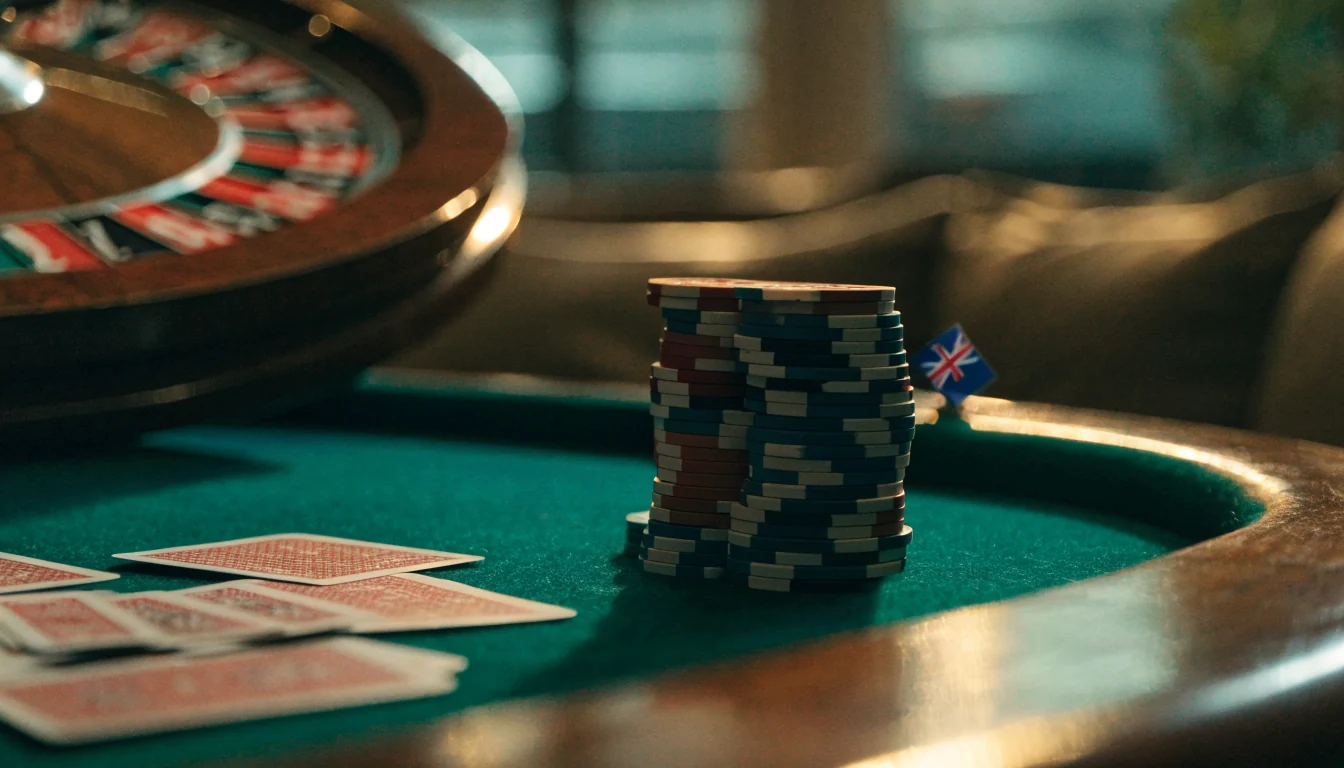
So the useful approach is not to invent game-specific tactics where none are established. Treat Five Dragons as a named pokie, and treat each spin as its own random event. If a tip claims that timing, a lucky sequence or a special ritual can make the machine pay, it is offering confidence, not an advantage.
The label is not a forecast.
Practical Play Limits: Set Boundaries Before the First Spin
The most useful tips for playing pokies are about containing the activity, not finding a way to change its outcome. I learned that a limit works only when it is set before play begins. Once a session is underway, the urge to revise a boundary can arrive dressed up as a sensible exception.
A deposit limit puts a ceiling on funds added during a chosen period. It is a control on access to money, not a prediction of what a session will cost or a promise that play will stop automatically in every setting. The point is to decide the boundary while the decision is still calm, then avoid raising it to make up for a result.

A session timer serves a different purpose. It marks the passage of time, which can become easy to lose track of when spins follow one another without much interruption. A timer does not improve the odds or tell anyone when a win is due. It creates a pause in the routine: play stops, the session is reviewed, and continuing is no longer the default.
I treat those controls as separate. A deposit limit constrains funds; a timer interrupts time spent playing. One cannot replace the other. Nor should either be treated as permission to keep going until the limit is reached. If a boundary has been hit, the session is over.
There is a practical distinction between setting a control and respecting it. A limit that can be casually moved during play is less useful than a firm decision made beforehand. If stopping becomes difficult despite those boundaries, stepping away is more important than adjusting them.
No clever routine. Just a clear stop.
Can I use PayID for pokies deposits?
Yes. All five evaluated platforms accept PayID, and the listed top Australian pokies sites offer instant, fee-free AUD deposits.
How do I gamble responsibly?
Set deposit limits and use session timers to keep play within boundaries. Remember that no pokies strategy guarantees a win or produces positive expected value.
Are RNG outcomes truly random?
Pokie spins are random and independent of previous results, so past outcomes cannot predict the next spin. Licensed sites use eCOGRA- or GLI-certified RNG technology.
Prepared by the Golden Bet Casino editorial staff.