Best pokies in Geelong: checking venues and claims
 Available in AU
It distinguishes current opening checks from payout claims and explains what local listings and venue reporting can—and cannot—verify.

Table of Contents
- Checking Whether a Geelong Pokies Venue Is Open
- What “Best Paying” Can—and Cannot—Tell You
- Online Pokies and the Australian Legal Position
- Searching by Distance: Airport, CBD and Geelong Vic
- Venue Reporting and What It Can Show
- Hours, Machine Operation and Responsible Gambling Officers
- The Crown Geelong Search: What Is Actually Verified
- CBD Clubs and the Limits of Local Venue Information
- The Parkes Search and Geelong Venue Data
- Cashless Searches, PayID and Newcastle-Geelong Confusion
Checking Whether a Geelong Pokies Venue Is Open
A search for a Geelong pokies venue that is open now is asking for a live fact, not a general description. The answer can change during the day, and a result that appears current may still reflect information entered earlier. I would treat an “open” label as a lead, not confirmation.
That distinction matters most when the trip depends on the answer. A venue page can remain visible after its details have changed; a map listing can show a normal pattern without reflecting an unexpected closure. Even a recent-looking result may not tell whether the whole venue is accessible at that moment. Search results are useful for finding a contact channel, but they do not amount to a live check of the door.
For a same-day decision, the most useful next step is direct confirmation through a venue’s own current channel, if one is available. A phone call can establish whether the venue is admitting patrons at the time in question. A current notice on an official page may also help, though a notice should be checked for its date and context. If neither provides a clear answer, the practical status remains uncertain.
I have seen how easily a simple status label gets treated as a promise. It is not one. “Open” can mean that a listing expects the business to be operating, not that someone has confirmed access at that moment. “Open now” is more specific in wording, but the wording alone does not make the information live. The label is only as dependable as the update behind it.

This is especially relevant to searches for early or late access. A result may show a broad operating pattern, but that does not settle whether the venue is open at the precise time of arrival. Nor does a search phrase asking about dawn access prove that any particular Geelong venue provides it. Without a current confirmation, the responsible reading is that the status is not established.
There is a second ambiguity in the word “open.” It can refer to a business being open in general, rather than confirming every part of the premises or every service a visitor has in mind. A listing may not define what its status covers. For a visit centred on pokies, a clear answer needs to address the intended access, not simply repeat a general business-hours label.
A useful check is therefore a narrow one: is the venue open to patrons at the intended time, and does the answer refer to the access being sought? If the response only confirms a general schedule or points to a third-party listing, it may not resolve the question. That is not a criticism of the listing; it is a limit of what that kind of information can establish.
The wording of a result can also make certainty look stronger than it is. “Open late” and “open early” are broad descriptions, not confirmation for a particular visit. A venue may have a published pattern, while a temporary change is communicated elsewhere—or not reflected in the listing yet. A date-stamped update is more useful than an undated label, but even then the detail should match the day and time being checked.
I would separate three things that often get compressed into one search result: a venue’s general profile, its stated schedule, and its present status. The profile helps identify the business. The schedule describes an expected pattern. Present status answers whether it is operating now. Only the last of these settles an immediate arrival, and it needs timely confirmation. Mixing them produces confidence without evidence.
- Use a venue’s own current channel for confirmation
- Check the date and context of official notices
- Use search results to find a contact channel
- Treat an “open” label as a guarantee of access
- Rely on a broad operating pattern for precise timing
- Assume “open now” means the information is live
A result for “pokies in Geelong” may help locate information, but it does not establish that a venue is open. Likewise, a result that says “open now” does not certify the accuracy of every detail on the page. The status should be read for what it actually says, with its source and freshness in mind.
The same separation applies to payout claims. A venue appearing open says nothing about a pokie’s payout percentage, and an opening-status label cannot verify a return figure. Those are different questions and require different evidence. An operational status is not a performance measure.
For a decision that depends on being admitted, confirmation from the venue is stronger than an unqualified search label. If the available information cannot confirm the visit’s timing and purpose, it is better to leave the status unresolved than to treat a plausible listing as certainty. A few words on a screen are not a live inspection.
What “Best Paying” Can—and Cannot—Tell You
Choosing pokies to play in Geelong starts with finding an option whose available details suit your preferences. This list provides a concise reference to help you assess the operators.
License: Curacao OGL/2024/1335/0780 · Min. deposit: EUR 20 Vegaz Casino lists a Curacao OGL license and a minimum deposit of EUR 20.
License: Curacao Gaming Control Board OGL/2023/176/0095 (Hollycorn N.V.) Neospin lists a Curacao Gaming Control Board license, OGL/2023/176/0095, held by Hollycorn N.V.
License: Curacao · Min. deposit: A$20 (POLi) Lucky Dreams lists a Curacao license and a minimum deposit of A$20 via POLi.
License: Tobique Gaming Commission · Payout speed: crypto ~10-15 minutes, fiat 1-5 days · Min. deposit: A$30 SkyCrown lists a Tobique Gaming Commission license and a minimum deposit of A$30. Its stated payout speeds are around 10–15 minutes for crypto and 1–5 days for fiat.
License: Curacao Gaming Control Board OGL/2023/174/0082 (Dama N.V.) SpinsUp lists a Curacao Gaming Control Board license, OGL/2023/174/0082, held by Dama N.V.
License: Curacao · Payout speed: crypto 30-60 minutes, fiat 1-5 days · Min. deposit: A$10 Wild Tokyo lists a Curacao license and a minimum deposit of A$10. Its stated payout speeds are 30–60 minutes for crypto and 1–5 days for fiat.
Payout speed: crypto ~90 minutes, fiat 1-5 days · Min. deposit: A$30 Kingmaker lists a minimum deposit of A$30. Its stated payout speeds are around 90 minutes for crypto and 1–5 days for fiat.
License: Curacao Gaming Authority (Jumpman Gaming Ltd) DragonSlots Casino lists a Curacao Gaming Authority license held by Jumpman Gaming Ltd.
License: Curacao Gaming Control Board JustCasino lists a Curacao Gaming Control Board license.
License: Curacao Gaming Control Board OGL/2023/176/0095 (Hollycorn N.V.) GoldenCrown lists a Curacao Gaming Control Board license, OGL/2023/176/0095, held by Hollycorn N.V.
“Best paying” sounds like a clean comparison: choose a venue, choose a pokie, and expect a better return. In practice, that label needs evidence about the exact game configuration being offered. A title alone is not enough. The same pokie can be set to different return-to-player (RTP) percentages by different casinos, according to a specialist review. That possibility makes a venue-wide claim especially difficult to support: it would need to be clear which games and settings were compared, and on what basis.
RTP is a percentage associated with a game setting. It can help describe the terms on which a game is configured, but it is not a promise about what a particular person will collect. A figure without a confirmed setting can mislead, while a confirmed figure still cannot predict the result of an individual session. Those are separate questions. One concerns the game’s configuration; the other concerns random outcomes.
This distinction matters when comparing pokies in Geelong. A list headed “best paying” may suggest that a venue has been checked against others, but the label does not show whether the comparison uses the same game settings, the same selection of games or current information. Without those details, “best” is a sales-style conclusion rather than a demonstrated comparison. I have seen how a confident label can do the work that the underlying evidence cannot.

Even a precise RTP setting does not make results arrive in a steady pattern. Each spin is generated independently by a Random Number Generator. The outcome of one spin does not set the outcome of the next, and a run of losses does not create a debt that a game must repay. Nor does a previous win establish that another win is due. That is the part promotional language tends to leave in the background. The next result remains uncertain.
A venue cannot therefore be called the best-paying option merely because a particular game has a published return figure. The setting needs to be attributable to the game actually available there, and the comparison needs a like-for-like basis. If those details are absent, a ranking can create an impression of certainty without telling the reader what was measured. A number on a page is not, by itself, proof that one Geelong venue pays better than another.
The same caution applies to claims about a whole area, including the CBD. A place name attached to “best paying” does not establish that every venue has been assessed or that every machine shares one setting. Game-level information and venue-level conclusions are not interchangeable. A claim about one configuration cannot automatically describe every pokie at that venue, still less the city as a whole.
I separate three things that are often bundled together: the game title, its selected RTP setting and the result of a spin. The title identifies the game. The setting describes one element of how it has been configured. The spin is a random event, not a personal forecast. Blurring those categories makes an ordinary comparison sound like a practical prediction. It is not one.
Each spin is generated independently by a Random Number Generator, meaning the outcome of one spin does not influence the next, nor does a run of losses guarantee a future win.
For anyone weighing up claims about Geelong pokies, the useful question is not simply which option is called the best. It is whether the claim identifies a verifiable setting and explains the comparison being made. If it does not, the label says little about the actual game configuration. If it does, it still says nothing certain about the outcome of a session. That distinction is easy to lose in a headline. It remains important.
Online Pokies and the Australian Legal Position
A Geelong address does not change the legal status of an online pokie. The Interactive Gambling Act 2001 prohibits operators from offering real-money online casino games to people in Australia without a domestic licence. No Australian-licensed online casinos exist, so there is no locally licensed online casino option for real-money pokies.
That distinction matters when an online service presents itself as available to Australians. An offshore operator may accept Australian customers, but acceptance is not the same as Australian authorisation. The law is directed at the companies providing the prohibited service, rather than making an individual player liable simply for using an offshore site. That does not turn the operator into a locally regulated business.
The practical weakness appears when something goes wrong. If an offshore casino refuses to pay winnings, an Australian player has no legal recourse in Australia to compel payment. The screen may display a balance; that is not the same as money held under an Australian casino licence or a local process for resolving a dispute. I have seen how easily those distinctions disappear in promotional language. “Available in Australia” describes access, not protection.

This is why online offers connected with Geelong should not be confused with physical pokies in the city. A site’s use of a local place name, or an offer framed around real-money play, does not establish that the operator is licensed here. Nor does a bonus label such as “no deposit” alter the underlying legal position. It is a promotional condition, not evidence of local oversight. High-limit claims and maximum-bet wording are also terms set by an operator; they do not create Australian safeguards.
The same applies to claims about a “best-paying” online pokie. A payment offer or a displayed game balance cannot establish that a site is authorised, and a local place name cannot establish a payout advantage. The legal issue comes first: the service is being offered to people in Australia by an operator without a domestic online-casino licence. Availability and legality are separate questions. So is trust.
There is also no special online category for people near Geelong Central or elsewhere in the region. The relevant distinction is whether real-money casino games are being supplied to someone physically in Australia, not whether the operator uses a Geelong label or markets itself as local. A website can look polished and still leave Australian customers without a domestic route to recover withheld winnings.
Legal Risk
Offshore online casinos operating in Australia without a domestic licence provide no legal recourse for players if the operator refuses to pay winnings.
For anyone reviewing the wider gambling context, the legal age for gambling in Australia, including online pokies, is 18. Deposit limits, loss limits and session time limits are among the responsible-gambling tools that may be offered, alongside self-exclusion. These tools can help manage participation, but they do not make an offshore casino Australian-licensed or provide a remedy for an unpaid withdrawal.
The point is narrow but important: an offshore site accepting Australian players is not an Australian-licensed online casino. The law places the central prohibition on operators, while Australian players who use an offshore service do not acquire the protections of a domestic licence. A local-sounding name, bonus or game offer cannot bridge that gap.
Searching by Distance: Airport, CBD and Geelong Vic
Location terms can make a list of pokies venues look more precise than it is. “Near” might mean a short walk, a drive across town or simply somewhere within a broad map view. Without a confirmed venue address and a defined distance, those meanings blur together. A result grouped under Geelong is not, by itself, evidence that a venue sits close to a particular landmark.
The same applies to the airport. A search for pokies near Geelong Airport may return businesses associated with the wider area, but that does not establish airport access, proximity or even that a listed venue offers pokies. Map pins and snippets can shorten names or fold several suburbs into one result. They are useful starting points for checking an address, not proof of the route or distance.

I have seen location labels do more work than the underlying details justify. “Nearby” sounds like a measured relationship. Often it is only a category chosen by a map service or directory. A precise-looking marker does not fix that problem: the venue’s entrance, the airport terminal and the route between them are separate details.
CBD and suburb labels
A CBD search has the same limitation. “Near the Geelong CBD” could refer to a venue within the central area or one elsewhere in the city that appears in a broad results list. The label alone does not settle which. North Geelong is another distinct location term, not a shortcut for a confirmed venue or for the whole Geelong area.
For a useful comparison, a location listing needs an identifiable venue name and street address. Distance then depends on the points being compared and the route used: straight-line distance and travel distance are not interchangeable. If a result does not make those basics clear, ranking it by apparent closeness gives a false sense of accuracy.
“Near me” is even less fixed. Its meaning depends on the searcher’s location settings and the service’s method for ordering results. A result shown first is not necessarily the closest venue, and it does not verify that pokies are available there. Search placement is not a measurement.
What a location result can establish
A map or directory may help identify places to investigate, but a location label cannot establish that a venue is open, that its machines are operating, or that it has any particular number of machines. Those are separate questions. Nor does a result for Geelong Airport establish that pokies are located inside the airport.
Attention: A map pin or “nearby” label is often a category chosen by a service and does not verify the actual route, distance, or current accessibility of a venue.
I would treat the address as the first check, then compare the actual route with the landmark that matters. If the listing provides no clear address, the distance claim has little practical value. If it does provide one, the listing still needs to be checked against the venue itself; directories can be incomplete or out of date.
That is the useful boundary: place labels can narrow an area, but they cannot substitute for verified venue details. A map pin is not a venue audit.
Venue Reporting and What It Can Show
A venue’s compliance paperwork tells a different story from a list of its pokies. It can show whether staff are expected to respond to gambling harm and whether certain incidents are recorded. It does not measure a venue’s entertainment value, the quality of its machines or the chance of a particular result.
A report published by regionriverina.com.au describes a requirement taking effect from 1 July: venues with more than 20 gaming machines must have a dedicated responsible gambling officer (RGO) on duty while those machines are operating. The threshold matters. The reported rule is not framed as a requirement for every venue, and it links the officer’s duty to machine operation rather than simply to a building being open.
In practical terms, an RGO gives the venue a designated person for responsible-gambling matters during the relevant operating period. That is an operational safeguard, not a badge that proves a venue is “safe” or “best”. Those words are often used loosely. The underlying question is narrower: is there a responsible gambling officer on duty when the rule applies?

The same report describes a requirement for venues to keep a gambling incident register. It is intended to record details of specified occurrences, including situations where a patron’s behaviour indicates they may be at risk of, or affected by, gambling harm. The register creates a record for oversight rather than leaving every response as an informal conversation that disappears once a shift ends.
That distinction matters. An incident entry is not a rating of the venue, nor does the existence of a register establish how often harm occurs there. It is a formal record of relevant occurrences. A register can support scrutiny of how a venue handles those situations; it cannot, by itself, show the full context or establish that every concern was identified.
I have seen compliance language do two jobs at once: set a clear staff obligation and reassure the public. The first job is measurable. The second can be overstated. A named officer and a register are concrete controls, but neither tells anyone whether a particular Geelong venue meets the machine threshold, how consistently a requirement is followed, or what a venue’s overall record looks like.
For people comparing Geelong venues, that makes this information useful but limited. It describes a system of responsibility and documentation, not a local league table. A venue’s size, its handling of an incident and its appeal as a place to visit are separate questions. Treating one as proof of the others turns compliance into advertising.
The strongest reading is a restrained one: the reported requirements establish who must be present under a defined condition and what kinds of events must be documented. They make accountability more legible. They do not identify a best pokies venue, and they do not reveal machine-level outcomes. Paperwork has a purpose. It is not a verdict.
Compliance Requirements
- Venues with over 20 machines must have a dedicated responsible gambling officer on duty
- Venues are required to maintain a gambling incident register for oversight
- These controls ensure accountability but do not indicate a venue’s payout performance
Hours, Machine Operation and Responsible Gambling Officers
A venue’s opening time and its pokies’ operating time are not necessarily the same thing. A club or hotel may be open for food, drinks or other services while its machines are switched off. Conversely, a venue’s general trading hours do not, by themselves, establish when pokies are available. Any claim that a Geelong venue operates pokies around the clock needs to be supported by a current venue timetable; the phrase “24-hour pokies” is not proof of continuous machine operation.
The same distinction matters when interpreting posted hours. A closing time for the premises may not specify when machine play ends, and a machine operating period does not establish that the whole venue is open to patrons throughout it. Hours can also differ between venues, so a general statement about the city would not settle the schedule at an individual location.
Responsible gambling officer requirements are tied to machine operation, not simply to a venue’s doors being open. A report by regionriverina.com.au describes a rule requiring venues with more than 20 machines to have a dedicated responsible gambling officer (RGO) present while those machines are running, effective from 1 July. The practical distinction is important: the relevant period is when the machines operate. A venue that remains open after machines have stopped is not, on that basis alone, evidence of continued machine availability.

The same report describes a one-month grace period for venues to remove signage and put the responsible gambling officer arrangements in place. That transition period concerns signage and staffing compliance. It is not an indication of a venue’s trading hours, a promise that its machines remain available, or evidence that any particular Geelong premises operates throughout the day and night.
I have seen how a single “open” label can flatten these differences. It may describe the venue, not the machines; it may reflect a listing that does not distinguish service areas or operating periods. The useful question is not just whether a building is open, but whether its pokies are operating at that time—and a general city-wide label cannot answer that for an individual venue.
Opening hours and machine hours are separate details, and the RGO duty follows machine operation rather than the venue’s overall timetable. The distinction is plain. The timetable is not.
The Crown Geelong Search: What Is Actually Verified
Putting “Crown” and “Geelong” together does not, by itself, identify a Crown venue in Geelong or establish that Crown machines operate there. A name in a search phrase is not evidence of a venue’s location, ownership, affiliation or facilities. Those details need to be established separately before the phrase can support a claim about where pokies are available.
I have seen how quickly a brand name can become shorthand in venue discussions. It may reflect what someone expects to find, a mistaken association, or a search for a particular style of gaming room. None of those possibilities confirms a local connection. The careful distinction is between a requested destination and an identified venue.
Brand and Location Ambiguity
A search phrase like “Crown in Geelong” may reflect a user’s expectation or a mistaken association rather than a verified business relationship or physical presence.
The same applies to descriptions such as “best pokies room”. That label is promotional unless it is tied to a stated, relevant measure. A room cannot be assessed from a name alone, and the wording does not establish the venue’s facilities, machine selection or operating arrangements. Calling a room “best” without a defined basis turns an impression into a claim.
A maximum cash payout is a separate matter. It depends on the rules and arrangements attached to a particular machine and venue; a location-and-brand phrase does not supply that information. Without venue-specific terms, there is no sound basis for stating a maximum or implying that one applies across machines. A headline is not a payout schedule.
This is where search results can mislead by proximity. A page may mention Geelong in one place and Crown in another, while the two references do not establish a shared location or business relationship. A map label, directory entry or user-generated listing can also repeat an association without showing what supports it. The wording may look definite. The underlying identification may not be.
For a reliable venue claim, the name and address need to correspond to the same operating place, and any statement about pokies or payout conditions needs to relate to that place specifically. Without that link, “Crown in Geelong” remains an unconfirmed association, not a verified venue description.
That distinction matters before any further comparison is made. Brand recognition cannot substitute for identifying the premises, and a broad label cannot establish machine-level conditions. The restrained reading is the accurate one: the phrase alone does not prove the connection.
CBD Clubs and the Limits of Local Venue Information
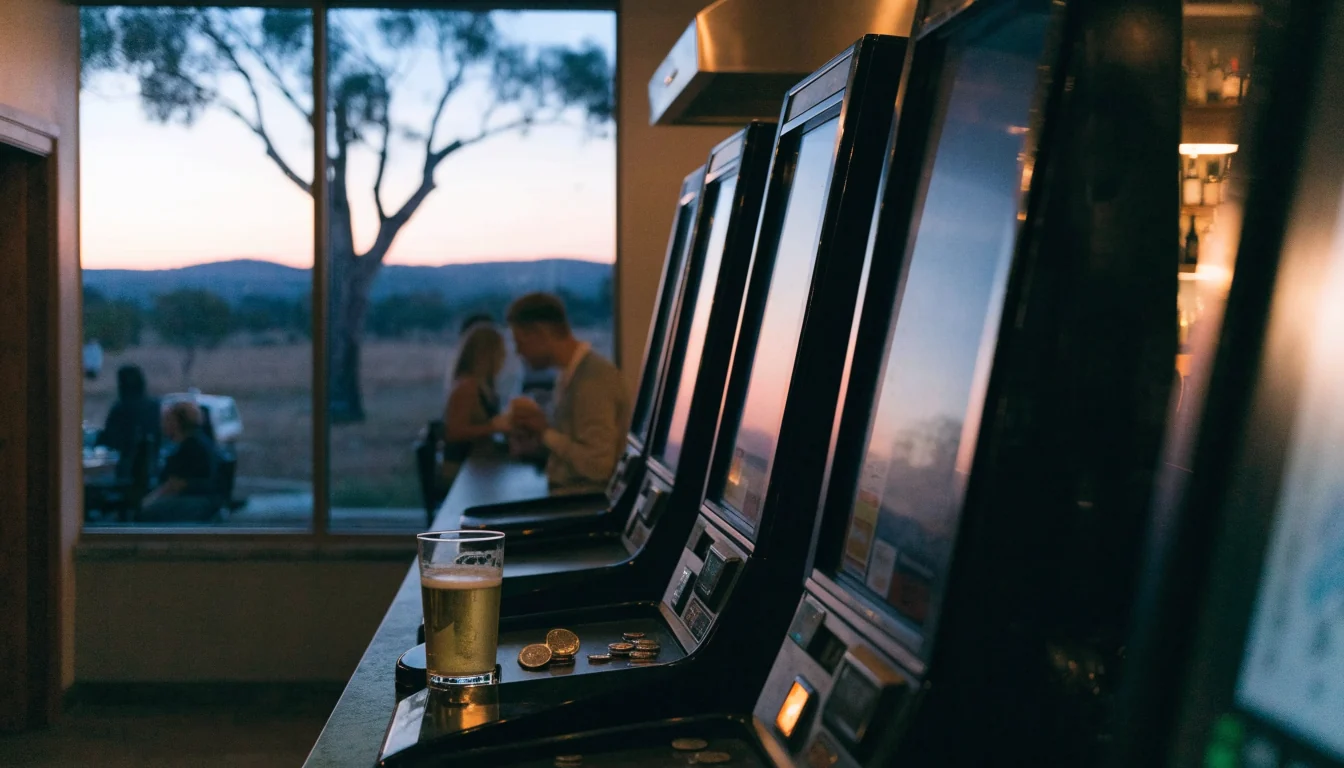
A club name and a CBD location can sound like enough to identify a place with pokies. In practice, those labels do not establish which venues have machines, where they are within a venue, or whether a particular club is operating them. I have seen how easily a broad listing turns into a confident-sounding claim once it is copied between pages. The detail can disappear; the certainty remains.
That matters when a result is framed as the “best” pokies in Geelong’s CBD. A ranking needs a stated basis and comparable information. Without those, “best” is just packaging: it may describe a writer’s preference, a promotion, or nothing measurable at all. It should not be read as evidence that one club has better machines, better odds, or more favourable conditions than another.
The same caution applies to claims about CBD pokies generally. A map pin, a club category, or a photograph of a gaming room does not confirm current machine availability. Nor does a club’s name establish its gaming facilities. Local details need to be checked with the venue itself; a broad label cannot fill in the operational facts.
Self-exclusion is a separate issue from finding a club. It is one of the standard responsible-gambling tools, alongside deposit, loss and session-time limits. Venue-level arrangements should not be inferred from a general listing. BetStop has a narrower scope: it applies to Australian-licensed operators and does not bind offshore gambling sites. It is not a directory of Geelong clubs or proof of a venue’s local self-exclusion process.
In my experience, search results often flatten these distinctions. “Club”, “CBD” and “pokies” appear together, so the result can look like a verified local guide even when it only repeats a category. That is not the same as a venue-by-venue account. No ranking follows from the wording alone.
BetStop applies specifically to Australian-licensed operators and does not bind offshore gambling sites.
For Geelong CBD clubs, the sound conclusion is modest: the terms identify the kind of place being sought, not a confirmed list of venues, machines or comparative quality. A local claim needs local confirmation. Anything stronger risks turning a label into a fact.
The Parkes Search and Geelong Venue Data
The wording that combines Parkes with Geelong does not, by itself, identify a venue or establish that a Parkes-named place is located in Geelong. It may bring together a place name, a venue name or another reference, but those possibilities should not be collapsed into a local address. I would treat the connection as unresolved unless a reliable venue record ties the name to a specific Geelong location.
That distinction matters because a familiar name can look like a location fact once it appears beside a city. It is not one. A result that repeats both terms does not confirm that a venue operates in Geelong, that it has pokies, or that any particular number of machines is available there. No local machine figures can be responsibly attached to the Parkes wording.
The same caution applies to descriptions such as “best pokies in Geelong”. In a location context, “best” can sound like a checked comparison of venues, but the phrase alone supplies no criteria and confirms no venue details. Without an identified local venue and evidence that supports a comparison, it cannot serve as a meaningful ranking. A confident label is not a record.
I have found that the practical mistake is to let a place-name overlap do the work of verification. The name needs to be connected to an actual venue, and the venue needs to be connected to Geelong, before local claims can follow. If either link is absent, machine availability, counts and venue-specific descriptions remain unsubstantiated. That is a narrow boundary, but an important one.

So the Parkes reference should not be read as proof of a Geelong pokies venue, nor as evidence about the machines inside one. It does not establish a local association merely by appearing alongside Geelong. Until the name and place are reliably connected, the responsible description is simply that the location remains unclear. No invented address. No assumed venue.
Cashless Searches, PayID and Newcastle-Geelong Confusion
A cashless pokies search can refer to different things: how a venue’s machines accept or handle funds, or a payment method used for online transactions. Those are separate questions. A payment option does not establish that a Geelong venue has cashless machines, and the label alone says nothing about how a machine works.
PayID is not a gaming product. It is an alias service connected to Australia’s New Payments Platform (NPP), allowing a bank transfer to be addressed using an email address, mobile number or ABN rather than account details. The NPP is available through major banks and encrypts transfers end to end. That describes the payment infrastructure, not the status or quality of any gambling service.
A specialist review has reported that some Australian banks may block PayID transfers to known gambling merchants. That possibility can affect whether a transfer goes through; it does not make a payment route evidence of licensing, fairness or accurate RTP information. Payment mechanics and a gambling service’s legal position are different matters.
The Newcastle-and-Geelong wording is also ambiguous. Naming both places does not, by itself, establish that a venue in one is connected to a venue in the other, or identify a local pokies offering. A location phrase is not a venue record.
From behind the counter, “cashless” can sound like a precise feature while leaving the practical detail unclear: which transaction, which machine, and which venue? Without venue-specific confirmation, it should not be treated as proof of an operating arrangement. Nor should PayID availability be used as a shortcut for judging a site. Different questions.
Are online pokies legal for Australian players?
Yes, Australians can play on offshore sites that accept them, because the law targets operators rather than players. However, no Australian-licensed online casino exists, and players have no legal recourse in Australia if an offshore casino withholds winnings.
What is the legal age for online gambling in Australia?
You must be 18 or older to gamble online in Australia.
What does “wagering requirement” actually mean?
It is the amount you must bet before bonus winnings can be withdrawn, usually expressed as a multiplier. For example, a $500 bonus with a 40x requirement means $20,000 in bets; if the requirement applies to a $500 deposit plus a $500 bonus at 35x, it means $35,000 in bets.
Do PayID deposits qualify for bonuses?
Yes, PayID is treated like any other qualifying deposit method at the sites described.
Created by the ”Golden Bet Casino” editorial team.